Buy wohnprojekte.eu ?
We are moving the project
wohnprojekte.eu .
Are you interested in purchasing the domain
wohnprojekte.eu ?
domain@kv-gmbh.de · 0541-91531010
Buy wohnprojekte.eu ?
How do dipole-dipole forces affect the boiling temperature?
Dipole-dipole forces are attractive forces between the positive end of one polar molecule and the negative end of another polar molecule. These forces cause the molecules to be attracted to each other and stick together, making it more difficult for them to break apart and become a gas. As a result, substances with stronger dipole-dipole forces will have higher boiling temperatures because more energy is required to overcome these attractive forces and turn the substance into a gas. Therefore, the presence of dipole-dipole forces can increase the boiling temperature of a substance. **
Why do ethers have only weak dipole-dipole interactions?
Ethers have only weak dipole-dipole interactions because the oxygen atom in the ether molecule is less electronegative than the oxygen atom in alcohols or the nitrogen atom in amines. This results in a smaller difference in electronegativity between the oxygen and the carbon atoms in the ether molecule, leading to weaker dipole moments. As a result, the overall dipole-dipole interactions in ethers are weaker compared to molecules with larger electronegativity differences, such as alcohols and amines. **

Similar search terms for Dipole
Top-Angebote
Products related to Dipole:
-
Headline Storecupboard One Pound Meals by Miguel Barclay – 85 Easy & Affordable RecipesMiguel Barclay is back with his sixth book in the 'One Pound Meals' series and he's on a mission to save you even more money and time with this collection of storecupboard recipes.Miguel has already revolutionised the way that many of you cook at home - with his budget recipes, healthy ingredients and his ingenious time-saving tips. In STORECUPBOARD ONE POUND MEALS Miguel takes his stress-free, maximum flavour philosophy and teaches you how to get the most out of your every day cupboard essentials. Tins, cans, dried herbs and spices become the main 'hero ingredients', helping you plan affordable dinners each week.With over 80 of Miguel's favourite storecupboard dishes, you'll have plenty of recipes for the whole family to enjoy, or tasty leftovers to eat the next day or freeze for another time.Miguel's budget-friendly cooking will once again bring great taste to your kitchen.Minimum fuss, maximum flavour and all for £1 per person.6,95 £*Shipping: 2,99 £Secure redirect to the provider
-
delilah Cosmetics Piece Brush Collection Vegan & SustainableThis set by Delilah includes all of the brushes you need for flawless and easy make-up application! With this limited edition line of professional quality brushes for eyes, cheeks and complexion your your makeup routine will be enhanced like never before! This 5 piece set includes delilah's Complexion, Concealer, Finishing, Shadow and Precision brushes and all are housed in a sleek new 100% sustainable container for the ultimate ethical luxury!98,00 £*Shipping: 0,00 £Secure redirect to the provider
-
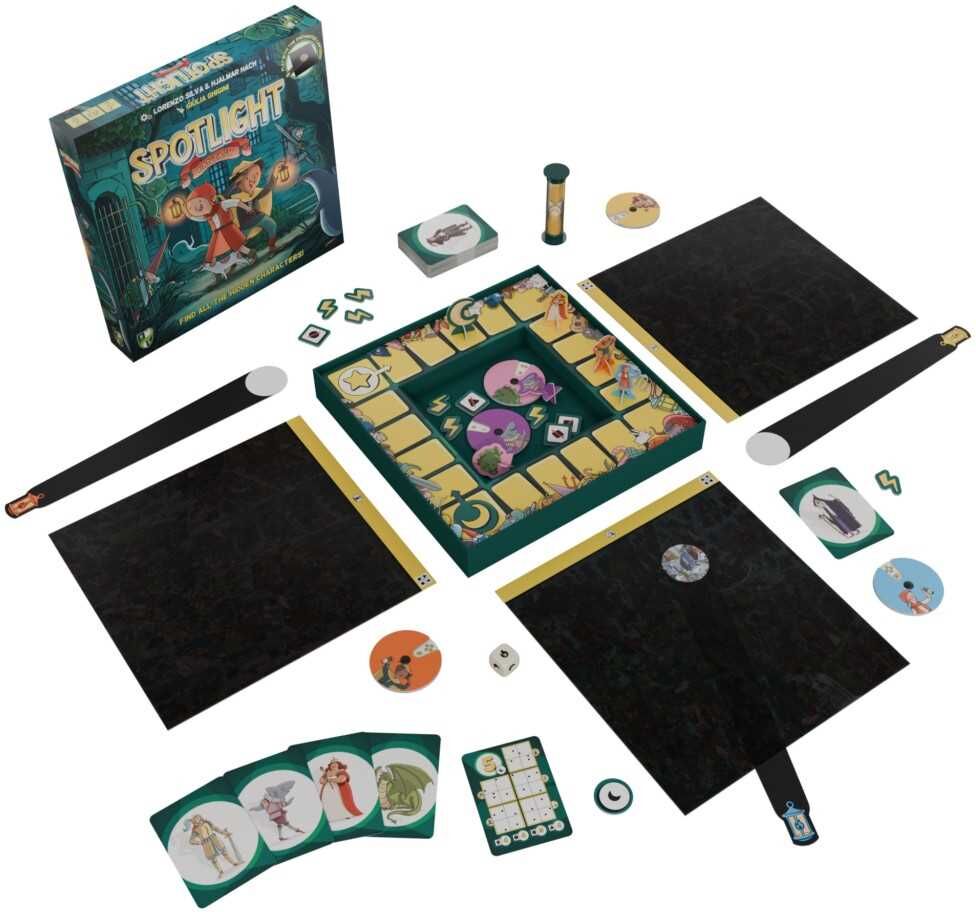
Spotlight – Fantasy Cooperative Board Game by Horrible GuildGather your friends for a cooperative search through a world of hidden characters and amusing objects in Spotlight – Fantasy. Players work together to discover pictures concealed in the darkness using their lanterns. Each successful find helps the team progress towards its shared objective, but the available light is limited. Players must decide when to use their lanterns, when to share them, and how to help one another make the most of every search. This fantasy edition combines observation, communication, and resource management in a family-friendly tabletop experience. Its cooperative format means everyone works towards the same goal rather than competing against one another, making it suitable for group play. In Spotlight – Fantasy, you search the illustrated scenes with your lantern, work together to find the required characters and objects, manage the available light as the game progresses, and reach the shared end goal before the lanterns run out.19,13 £*Shipping: 3,95 £Secure redirect to the provider



-
Why are hydrogen bonds stronger than dipole-dipole interactions?
Hydrogen bonds are stronger than dipole-dipole interactions because they involve a specific interaction between a hydrogen atom and a highly electronegative atom such as oxygen, nitrogen, or fluorine. This creates a strong partial positive charge on the hydrogen atom and a strong partial negative charge on the electronegative atom, leading to a strong attraction between the two. In contrast, dipole-dipole interactions occur between the partial positive and negative charges of polar molecules, which are generally weaker than the specific interaction between a hydrogen atom and a highly electronegative atom in a hydrogen bond. **
-
Is the ammonia molecule a dipole or not a dipole?
The ammonia molecule is a dipole. This is because the molecule has a trigonal pyramidal shape with a lone pair of electrons on the nitrogen atom. The electronegativity difference between nitrogen and hydrogen causes the molecule to have a net dipole moment, with the nitrogen end being partially negative and the hydrogen end being partially positive. This makes ammonia a polar molecule. **
-
Why is CO2 not a dipole and H2O a dipole?
CO2 is not a dipole because it has a linear molecular geometry, meaning the two oxygen atoms are symmetrically arranged around the central carbon atom, resulting in a net dipole moment of zero. On the other hand, H2O is a dipole because it has a bent molecular geometry, causing the oxygen atom to pull the shared electrons closer to itself, resulting in a net dipole moment. This uneven distribution of charge creates a positive end (the hydrogen atoms) and a negative end (the oxygen atom), making H2O a polar molecule. **
-
What is the difference between hydrogen bonding and dipole-dipole interactions?
Hydrogen bonding is a specific type of dipole-dipole interaction that occurs between a hydrogen atom bonded to a highly electronegative atom (such as oxygen, nitrogen, or fluorine) and another electronegative atom in a different molecule. This type of interaction is stronger than regular dipole-dipole interactions because of the large electronegativity difference between the hydrogen and the other atom, resulting in a stronger attraction between the molecules. In contrast, dipole-dipole interactions occur between the positive end of one polar molecule and the negative end of another polar molecule, but do not involve a hydrogen atom bonded to a highly electronegative atom. **


What is the difference between a dipole and a non-dipole?
A dipole is a molecule that has a separation of positive and negative charges, resulting in a net dipole moment. This means that the molecule has a non-uniform distribution of electron density, leading to a partial positive and partial negative charge. On the other hand, a non-dipole molecule has a symmetrical distribution of electron density, resulting in no net dipole moment. This means that the molecule does not have a separation of positive and negative charges, and therefore does not exhibit dipole-dipole interactions. **
When do Van der Waals forces and dipole-dipole interactions occur?
Van der Waals forces occur between all atoms and molecules, regardless of their polarity, due to temporary fluctuations in electron distribution. Dipole-dipole interactions, on the other hand, occur between polar molecules that have a permanent separation of positive and negative charges. Both types of interactions are important in determining the physical properties of substances, such as their boiling and melting points, and play a significant role in the behavior of gases, liquids, and solids. **
Top-Angebote
Products related to Dipole:
-
Earthborne Rangers Cooperative Card Game - Earthborne Games - Cooperative GameplayExplore a transformed wilderness in Earthborne Rangers, a cooperative and customizable card game set in the far future. Players take on the roles of Rangers who protect a mountain valley shaped by extraordinary scientific achievements created to save Earth from destruction. Build and customize your Ranger's deck, work together to overcome challenges, and investigate the living world around you. The game combines narrative exploration with strategic card play, allowing each player to develop their own approach as the group journeys through the valley. Key features include cooperative gameplay, customizable decks, and a story-led exploration in a world transformed by advanced technology. Earthborne Rangers is suitable for players looking for an immersive tabletop experience with evolving characters, exploration, and collaboration.72,03 £*Shipping: 0,00 £Secure redirect to the provider
-
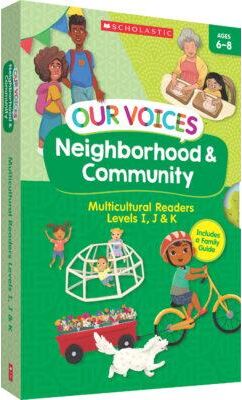
Our Voices: Neighborhood & Community Boxed SetFoster a feeling of belonging while building key reading skills with these colorful storybooks that spotlight a variety of neighborhoods and communities. The 10 charming stories feature characters from different cultural backgrounds who learn about...32,37 $*Shipping: 0,00 $Secure redirect to the provider
-
Headline Storecupboard One Pound Meals by Miguel Barclay – 85 Easy & Affordable RecipesMiguel Barclay is back with his sixth book in the 'One Pound Meals' series and he's on a mission to save you even more money and time with this collection of storecupboard recipes.Miguel has already revolutionised the way that many of you cook at home - with his budget recipes, healthy ingredients and his ingenious time-saving tips. In STORECUPBOARD ONE POUND MEALS Miguel takes his stress-free, maximum flavour philosophy and teaches you how to get the most out of your every day cupboard essentials. Tins, cans, dried herbs and spices become the main 'hero ingredients', helping you plan affordable dinners each week.With over 80 of Miguel's favourite storecupboard dishes, you'll have plenty of recipes for the whole family to enjoy, or tasty leftovers to eat the next day or freeze for another time.Miguel's budget-friendly cooking will once again bring great taste to your kitchen.Minimum fuss, maximum flavour and all for £1 per person.6,95 £*Shipping: 2,99 £Secure redirect to the provider
-
How do dipole-dipole forces affect the boiling temperature?
Dipole-dipole forces are attractive forces between the positive end of one polar molecule and the negative end of another polar molecule. These forces cause the molecules to be attracted to each other and stick together, making it more difficult for them to break apart and become a gas. As a result, substances with stronger dipole-dipole forces will have higher boiling temperatures because more energy is required to overcome these attractive forces and turn the substance into a gas. Therefore, the presence of dipole-dipole forces can increase the boiling temperature of a substance. **
-
Why do ethers have only weak dipole-dipole interactions?
Ethers have only weak dipole-dipole interactions because the oxygen atom in the ether molecule is less electronegative than the oxygen atom in alcohols or the nitrogen atom in amines. This results in a smaller difference in electronegativity between the oxygen and the carbon atoms in the ether molecule, leading to weaker dipole moments. As a result, the overall dipole-dipole interactions in ethers are weaker compared to molecules with larger electronegativity differences, such as alcohols and amines. **
-
Why are hydrogen bonds stronger than dipole-dipole interactions?
Hydrogen bonds are stronger than dipole-dipole interactions because they involve a specific interaction between a hydrogen atom and a highly electronegative atom such as oxygen, nitrogen, or fluorine. This creates a strong partial positive charge on the hydrogen atom and a strong partial negative charge on the electronegative atom, leading to a strong attraction between the two. In contrast, dipole-dipole interactions occur between the partial positive and negative charges of polar molecules, which are generally weaker than the specific interaction between a hydrogen atom and a highly electronegative atom in a hydrogen bond. **
-
Is the ammonia molecule a dipole or not a dipole?
The ammonia molecule is a dipole. This is because the molecule has a trigonal pyramidal shape with a lone pair of electrons on the nitrogen atom. The electronegativity difference between nitrogen and hydrogen causes the molecule to have a net dipole moment, with the nitrogen end being partially negative and the hydrogen end being partially positive. This makes ammonia a polar molecule. **
Similar search terms for Dipole
-
delilah Cosmetics Piece Brush Collection Vegan & SustainableThis set by Delilah includes all of the brushes you need for flawless and easy make-up application! With this limited edition line of professional quality brushes for eyes, cheeks and complexion your your makeup routine will be enhanced like never before! This 5 piece set includes delilah's Complexion, Concealer, Finishing, Shadow and Precision brushes and all are housed in a sleek new 100% sustainable container for the ultimate ethical luxury!98,00 £*Shipping: 0,00 £Secure redirect to the provider
-
Spotlight – Fantasy Cooperative Board Game by Horrible GuildGather your friends for a cooperative search through a world of hidden characters and amusing objects in Spotlight – Fantasy. Players work together to discover pictures concealed in the darkness using their lanterns. Each successful find helps the team progress towards its shared objective, but the available light is limited. Players must decide when to use their lanterns, when to share them, and how to help one another make the most of every search. This fantasy edition combines observation, communication, and resource management in a family-friendly tabletop experience. Its cooperative format means everyone works towards the same goal rather than competing against one another, making it suitable for group play. In Spotlight – Fantasy, you search the illustrated scenes with your lantern, work together to find the required characters and objects, manage the available light as the game progresses, and reach the shared end goal before the lanterns run out.19,13 £*Shipping: 3,95 £Secure redirect to the provider
-
Pathfinder Quest - Cooperative Campaign Game by Paizo PublishingEmbark on a thrilling adventure in Pathfinder Quest, a cooperative campaign game set in the Pathfinder world. The people of Falcon's Hollow face a growing threat as the restless dead return and strange activity stirs around the volcano. Create a character by choosing an ancestry, background, and class, then take on a sequence of linked adventures. Each session presents encounters, decisions, and challenges that shape the developing story. The Adventure Book guides the action, while the Challenge Book reveals the consequences of your choices at the right moment, helping to preserve the game's mysteries. As the campaign progresses, characters gain new feats, spells, and equipment to help them face increasingly powerful enemies. Your group's decisions are recorded throughout the campaign and influence its outcome. The game includes a rulebook, adventure book, and challenge book, as well as 10 custom six-sided dice, 356 cards, and 17 double-sided map tiles.100,03 £*Shipping: 0,00 £Secure redirect to the provider
-
Deckscape: Dracula's Castle - Cooperative Card Game - daVinci EditriceEnter a suspenseful escape-room adventure in a compact card game designed for cooperative play. Deckscape: Dracula's Castle invites players to travel to Transylvania to return an ancient book to Count Vlad D. Once inside the castle, the group must work together to interpret clues, solve puzzles, and make clever use of the items included in the game. The story unfolds through a deck of cards, with each discovery contributing to the unfolding mystery. Players discuss ideas, examine details, and combine their deductions as they try to escape as quickly as possible. This game is designed for a group experience, making it suitable for friends and family who enjoy puzzles, deduction, and story-led challenges.11,16 £*Shipping: 3,95 £Secure redirect to the provider
-
Why is CO2 not a dipole and H2O a dipole?
CO2 is not a dipole because it has a linear molecular geometry, meaning the two oxygen atoms are symmetrically arranged around the central carbon atom, resulting in a net dipole moment of zero. On the other hand, H2O is a dipole because it has a bent molecular geometry, causing the oxygen atom to pull the shared electrons closer to itself, resulting in a net dipole moment. This uneven distribution of charge creates a positive end (the hydrogen atoms) and a negative end (the oxygen atom), making H2O a polar molecule. **
-
What is the difference between hydrogen bonding and dipole-dipole interactions?
Hydrogen bonding is a specific type of dipole-dipole interaction that occurs between a hydrogen atom bonded to a highly electronegative atom (such as oxygen, nitrogen, or fluorine) and another electronegative atom in a different molecule. This type of interaction is stronger than regular dipole-dipole interactions because of the large electronegativity difference between the hydrogen and the other atom, resulting in a stronger attraction between the molecules. In contrast, dipole-dipole interactions occur between the positive end of one polar molecule and the negative end of another polar molecule, but do not involve a hydrogen atom bonded to a highly electronegative atom. **
-
What is the difference between a dipole and a non-dipole?
A dipole is a molecule that has a separation of positive and negative charges, resulting in a net dipole moment. This means that the molecule has a non-uniform distribution of electron density, leading to a partial positive and partial negative charge. On the other hand, a non-dipole molecule has a symmetrical distribution of electron density, resulting in no net dipole moment. This means that the molecule does not have a separation of positive and negative charges, and therefore does not exhibit dipole-dipole interactions. **
-
When do Van der Waals forces and dipole-dipole interactions occur?
Van der Waals forces occur between all atoms and molecules, regardless of their polarity, due to temporary fluctuations in electron distribution. Dipole-dipole interactions, on the other hand, occur between polar molecules that have a permanent separation of positive and negative charges. Both types of interactions are important in determining the physical properties of substances, such as their boiling and melting points, and play a significant role in the behavior of gases, liquids, and solids. **
* All prices are inclusive of VAT and, if applicable, plus shipping costs. The offer information is based on the details provided by the respective shop and is updated through automated processes. Real-time updates do not occur, so deviations can occur in individual cases. ** Note: Parts of this content were created by AI.